Monday, June 28, 2010

Nail Polishes You Can Use With Konad

Tyndale: Evidence from the Great Work of God


Williams Tyndale

Williams Execution Tyndale in 1536

October 6 1536, a pitiful figure he was taken to a dungeon of the Castle Vilvoorde, near Brussels, Belgium. For nearly a year and a half, the man had to endure being isolated in a dark, damp cell. Now, outside the walls of the castle, the prisoner was tied to a pole. had time to utter aloud his final prayer: "Lord, open the eyes of the King of England", after which he was hanged. Immediately, his body burned at the stake. Who was this man, and what was the offense for which both political and ecclesiastical authorities had condemned? His name was William Tyndale, and his crime was translating the Bible into English and it is published.

Tyndale, born in England at the time that Columbus sailed to the New World, was educated at Oxford and Cambridge and became a member of the Catholic clergy. He spoke eight languages \u200b\u200bfluently, including Greek, Hebrew and Latin. Tyndale was an ardent student of the Bible, and was very concerned about the widespread ignorance about the Scriptures that observed among priests and laity alike. In a heated discussion with a priest who believed that the Scriptures were due to reach the common man, Tyndale vowed, "If God gives me life, before many years pass, I'll have the young man who drives the plow to know scripture over yourself! ".

In the life of Joseph Smith's promise of Tyndale Williams when he said that if God granted life, before many years pass, the home would make the young man who drives the plow to know more of the Scriptures that the cleric.

requested the approval of church authorities to prepare a translation of the Bible into English so that everyone could read the word of God and put it into practice. Was denied, because the prevailing opinion was that the shortcut to the Scriptures by someone other than the clergy threatened the authority of the church and it was like throwing "pearls before swine" (Matthew 7: 6).

However, Tyndale undertook the difficult task of translation. In 1524, he traveled to Germany under an assumed name where he lived most of his time in hiding, under constant threat of arrest. With the help of loyal friends, Tyndale was able to publish the English translations of the New Testament and later the Old Testament. The Bibles were introduced illegally into England, were in high demand and greatly valued that they could get them. Be shared widely, but in secret. The authorities burned all the copies they found. However, in less than three years after Tyndale's death, God really opened the eyes of King Henry VIII, and the publication what is called "The Great Bible, the Scriptures in English began to be available to the public. Tyndale's work became the foundation of almost all future translations of the Bible into English, including the King James Version

Henry VIII

Translation of the Bible Williams

Tyndale William Tyndale

was not the first nor the last of those who have sacrificed in many countries and languages, even to the point of death, to take the word of God of Darkness. We owe them all a debt of gratitude. We perhaps a further debt to those who faithfully recorded and preserved the word through the ages, often painstaking work and sacrifice, Moses, Isaiah, Abraham, John, Paul, Nephi, Mormon, Joseph Smith and many more.

Thursday, June 24, 2010

When Can Postnuptialcanada Agreement Be Signed

Stela 5 (Izapa Mexico) Interpreting


click on photo to view larger


On the left, the Stela 5, one of the most extraordinary archaeological pieces found in Mexico. To the Right, the relationship with "Lehi's vision." In the Book of Mormon (1 Nephi 8), relates the vision or dream of Lehi in which you can see interesting details to compare with the Stela 5.

6.-

In Lehi's Dream

Similarities in the Stela 5

1.-The Tree of Life. 1 .- The tree of life or the world, watched over by guardian spirits.
2.-The river water.
2 .- The flow of rivers coming from the rains.
3.-The straight and narrow path. 3.-lines from the sources of the river to the tree
4.-The Iron Rod.
4.-The thick line is the path to the tree.
5.-The spacious field or wilderness, so dark and sad.
5 .- A spacious area covered by a dark fog.
Countless people.
6.-a generic shape while in the field.
7.-A multitude of people filling the great and spacious building. 7.-The symbol of a Man in a box, which is a bit higher than others.
8.-Dark and Dark.
8.-A symbol of darkness and gloom.
9.-A heavenly messenger or guide. 9.-The god Quetzalcoatl (Feathered Serpent) in front of the tree.
10.-A person rising above the field.
10.-A traveler is guided by God as an extension of your arm.

11.-The Family of Lehi:

a) Lehi, b) Saria, c) Ne, d) Sam, e) Laman, f) Lemuel

11. - There are 6 human figures of a family Quiche Maya, being the first images of the Fathers then the figures of two young sons (one king and his type) and finally the figures of two older brothers oppressed by two children.
12.-Some of those who are on their way to the tree are blinded.
12.-A person who is on the way the tree is blinded by a cloak over his head.
13.-Those who come to receive the fruit tree.
13.-The figure of a person receiving a result of the hands of God.

14.-Lehi comply with the law of Moses.

15.-The Child.

14 .- The image of a priest possibly burning incense.

15 .- A priest-king worshiping the image of a child.


Image Sketch Stela 5

Most people are familiar with the studies of Professor M. Wells Jakeman made in 1950 in which shows the hypothesis of the Tree of Life in Lehi (LTL). Dr. Jakeman studies were temporary fame, but soon fell foul of the majority of his academic colleagues to try to prove his thesis with its principles, what was known as "top twenty correlation characteristics, and eighty-two" agreements or similarities, "most researchers saw as" a matter of coincidence based only on superficial similarities "(Coe 1973: 44) .

Subsequent studies cast serious doubt on the majority of correlations Jakeman, which were somewhat fortuitous, and attempts to continue without any convincing comparisons with respect to the scene of the vision. However, you can easily recognize the top ten physical characteristics, compared to an adequate correlation (tree, river, road, rod, and six family members of the Law) and his treatment of the names of the symbols of Lehi and Saria, even questionable.

The head ornament in the shape of a crown of horns are used in Egyptian ornaments were worn by the princesses, and Saria is a name which in Hebrew means "princess." The meaning of the name Lehi in Hebrew is chin or jaw, another feature is that it is a priest. Today

the chances of a possible link with Lehi's dream are still valid. Parallel studies of this type have been accepted only in part of the correlations in which the authenticity of the comparison are recognized as the Stela 5, Izapa and myth of the Popol Vuh, for example. Stela 2 and 5 are generally recognized for their possible connections with the research I Popol Vuh (Norman 1976).

The possibilities of Lehi's dream scenario: 1) that have been rejected (very unlikely at this point), 2) remain uncertain, 3) that have an indirect relationship with similarities based on oral tradition or 4) that can be shown as a full and authentic text of the Book of Mormon (a real possibility). The last possibility requires an extensive and exhaustive search and can not be concluded hastily.


References

Jakeman, M. Wells. "Stela 5, Izapa Chiapas, Mexico; A Major Archaeological Discovery of the New World." The University Archeological Society, Special Publications, no 2. Brigham Young University, 1958.

Largey Dennis L. General Editor. Book of Mormon Reference Companion. Deseret Book Company. 2003.

Norman, V. Garth. "Izapa Sculpture, Part 1 Album, Part 2 Text. Papers of the New World Archaeological Foundation. no. 30. Brigham Young University, 1973, 1976.

Fuente: www.planetamormon.org

What Happened To My Sunmicrosystem Stock?


Fuente

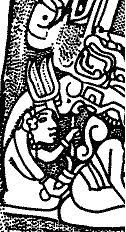
Saria in the wake 5


The figure seems to be a woman associated with the figure of Lehi. Female characteristics are suggested by what appears to be a cover for the head that flows over the shoulders and knees position, which are typical of indigenous women in Guatemala today. This blanket suggests that the figure may represent Sariah, Lehi's wife and mother of Laman, Lemuel, Sam, and Nephi. Sariah figure bent back, similar the figure of Lehi.


The bent back, suggests that she is an older person who is associated with the figure of Lehi as either an assistant or a wife. The headdress is rare in Mesoamerica. Suggests the presence of feathers fees associated with the deity, as a priestess. Contact with the eyes of the figure of the angel looking Sariah or the tree may express the will of his party to participate in the fruit of the tree. Feathers between the horns are symbols of death and, as such, suggests the concept of life which springs from death or resurrection. In Hebrew, the name Sarah means princess or Sariah. The headdress of the figure of Sariah justifies the requirement. The dualism of Nephi figure in relation to Figure Sariah also deserves mention. Whereas the figure of Nephi contains symbols of birth associated with it, Figure Sariah has symbols of death associated with it - the latter being represented by the posterior slope and old age, the higher position of the figure in an upward motion. The symbols of resurrection, as mentioned, are also present in Figure Sariah. Therefore, the text of Stela 5 represent man's journey through life. Finally, the fish Ring-tailed in the right hand of the figure Sariah has apparently been sacrificed to the instrument in his left hand. Two fish are also present in the top of the sculpture, as well as on the figure Lemuel near Angel "A." The two fish above the figure of Lemuel what appear to be pieces of fruit in the mouth. The fruit may suggest a desire to Lehi to his family to partake of the fruit. The fruit can also represent death. The resurrection is represented by the same two fish in the upper panel are now returning to earth.

Exploring the Lands of The Book of Mormon, Joseph L. Allen, Ph.D.

Sam in the Stela 5


Sam, the older brother of Nephi, expressed will keep the commandments of God. When Lehi blessed Sam, Sam was blessed with Nephi
... he [Lehi] spoke to Sam, saying: Blessed art thou, and thy seed, for you to inherit the earth as your brother Nephi. And your offspring will be reckoned with that of Nephi and you will even like your brother and your descendants like su desendencia, y serás bendecido en todos tus días. (2 Nefi 4:11)
La imagen representa posiblemente a Sam. Su altura y posición sentada lo califica para ser algo más que un asistente de la figura de Nefi. La sombrilla se apoya sobre los dos la figura de Nefi y la figura de Sam. Este posicionamiento sugiere más bien un papel de apoyo en comparación con un papel criado por la figura de Sam.
Los rasgos faciales de la figura de Sam en la estela 5 han sido erosionados, lo que hace que los detalles sean indescifrable. Sin embargo, el contacto con la nariz de la figura de Sam con lo que Norman identifica como el cuerpo de la serpiente Sam lo alinea con Quetzalcóatl (serpiente emplumada), or Christ, As a result, the text of stone Stela 5 show that Sam is willing to partake of the fruit of the tree of life. Sam expressed the will to follow Nephi in the wilderness, as they are separated from their brothers Laman and Lemuel:

... I, Nephi took my family ... and Sam, my brother and his family .... (2 Nephi 5:6)

additional symbolism is associated with the figure of Sam in terms of resurrection and eternal life. Norman found that the engravings of Stela 5, not only portrays the story of Lehi's family, but also indicate responsibility for humanity's pursuit of eternal life through Christ's atonement. The back of the figure of Sam is close to what appears to be a stream of water. As the rain comes down in the jungle area of \u200b\u200bIzapa, the evaporation process begins immediately to heaven. This can be symbolically related to the birth of man and his subsequent ascension

spirit after death to the spiritual world with the God who gave him life.

Exploring the Lands of The Book of Mormon, Joseph L. Allen, Ph.D.

Nephi Stela 5


Jakeman proposed that the image depicts the prophet Nephi, son of Lehi. The figure of Nephi is the same size as the Lehi and is contained in an authoritarian gesture so much the same way that the figure of Lehi. The figure of Nephi is a tool in the left hand, which can be a pencil or a chisel. He has the appearance of writing in registers. Her headdress consists of cereals and is a young god of the grains, whose Egyptian name is called or Nepi Nepri. (Jakeman 1958:45)

Sam in the Stela 5


The fringed parasol or umbrella is maintained with respect to the figure of Nephi is both a Maya, a symbol that represents old world royalty. The headdress seems to identify the figure Nephi as a high priest of God. The symbol of inverted question mark near her mouth suggests that he is speaking. Contact with the glyph's speech the Angel "B", suggests that the figure of Nephi speaks for God.


The small skull head that rests on the forehead of the figure Nephi has what appears to be a piece of fruit from the tree in the mouth. This may suggest that the figure of Nephi is willing to share in the fruits of the tree or is willing to follow the commandments of God. As a result, after death, represented by the skull, the figure of Nephi can claim eternal life through Christ's atonement.

Exploring the Lands of The Book of Mormon, Joseph L. Allen, Ph.D.

Lehi = Quijada

Original Word: לֶ ֫ חִי
Transliteration: Lechi
Phonetic Spelling: (lekh'-ee)
Definition of Lehi: From an unused root meaning of the cheek bone or jaw bone


In Hebrew this word is Lechi, the "ch" being practically the same as our "h." In Palestine, a mountainous district in Judea, near Jerusalem, was known as Lehi. (Judges 15:19) Samson, after his battle with the Philistines, and threw his only weapon, the jawbone of an ass, and called the place of combat Ramat-Lehi, "The Hill of Lehi." Then he was thirsty, and the Lord, in answer to his prayer, he opened a crack in the hill and left water there. So he called the spring, In-hakkore, "the spring of that he calls" (in response to prayer), which is in Lehi to this day. "This incident is remembered by the name of the father of Nephi.

In the language Lenape word is lechau, which is identical to the Hebrew lechi. This indigenous language which means the delta of a river may well have been suggested by the form of a jawbone of a donkey.


TA Joyce mentioned an Indian tribe in Colombia, located north of the Chibcha, which he called the Laches, a name that seems to be identical to the Hebrew Lechi and the Book of Mormon Lehi.

We noticed that the name is known far away in the Hawaiian Islands. In the November 1921, Pacific Paradise, a magazine published in Honolulu, there is the statement that the former name of Diamond Head, a prominent volcano was Leahi. This is not only a very slight variation in spelling.

Commentary on the Book of Mormon, vol. 2 by Janne M. Sjödahl, George Reynolds
Hebrew Dictionary Lexicon Strong
Lehi in the Stela 5


The element of the history of both Stela 5 and Lehi's vision relates to the experience of Lehi. On the monument, Lehi may be represented by the figure of the old man as shown in the picture. In this representation Lehi represents the legendary ancestor spoken of in the history of Mesoamerica. He is leaning forward with his hand in a gesture or teaching position. He is sitting on a cushion similar to the altars that rest against many of the stone monuments in the area where the Stela 5. A jaw bone immediately behind the head was given by Jakeman to be a glyph that represents the name of Lehi.

Exploring the Lands of The Book of Mormon, Joseph L. Allen, Ph.D.

Angeles or Cherubim in the Stela 5


angels or cherubs play an important role both in Lehi's vision in the tree of life carved on Stela 5. They take care of the tree of life Izapa. In the Book of Mormon, Lehi is led by an angel to the tree of life, and an angel gives Nephi interpretation. In figure 5 highlights Estela cherubim guarding the tree of life. The two cherubim (or deities or angels) are the same size. Masks and poultry appear to be purely symbolic. The great height of the cherubim and the fact that all the other figures have direct or indirect contact with these deities suggest that a person must go through them to partake of the fruit of the tree.

Exploring the Lands of The Book of Mormon, Joseph L. Allen, Ph.D.


The Tree of Life in the Stela 5


Dominating Stela 5 is a tree loaded with fruit located in the center of the carved design, with its roots in a base of soil from the top panel and its branches extend to a panel of heaven. (Norman 1976:166)
The tree in the Stela 5 is an aspect of the great ceiba independent is common to the area where the stone. The tree that bears fruit, especially white it is also the focus of the vision. The tree of life, simply represents Jesus Christ, the Saviour of the world. He is the tree of life. By partaking of the fruit of the tree, we can have eternal life, which is possible through the atonement of Christ.

Exploring the Lands of The Book of Mormon, Joseph L. Allen, Ph.D.